
Igniting Hope – Rabbi Niole Guzik

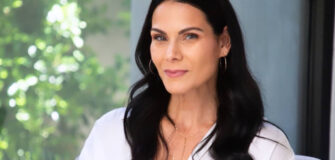
One of the telling signs High Holy Days are around the corner at Sinai Temple: We prepare a short video message for the congregation. This year, community members joined in, and in the downtime between photoshoots, I asked some of our most involved congregants: “What sermons do you need to hear from your rabbis on Rosh Hashana and Yom Kippur?” I braced myself for their answers and was spiritually moved by their unexpected responses.
What did I expect? I thought they would want to hear the rabbis speak about the political climate. Or perhaps they’d ask us to weigh in on the current war between Hamas and Israel. Even the ever-growing statistics on antisemitism in the United States and around the world. And while we may touch on some of those areas, overwhelmingly, the congregants steered me in a very different direction.
“Rabbi, can you speak about personal change and growth?” “Rabbi, in a world that feels dark and narrow, help us find hope and a way through the chaos.” Suffice it to say, I found a sense of optimism in hearing their reflections.
Rosh Hashana and Yom Kippur need not be our soapbox, waxing poetic on which political figure we think is best or worst for the Jewish people. Frankly, I wasn’t trained in that area, and neither were my colleagues or classmates. But we were taught how to use our tradition, the words of the Torah, and rabbis of past and modern day, to bring and nourish light where, sadly, it feels brutally empty and cold.
Whether it’s the current state of the world, a post-October 7 Israel, broken hearts through the death of someone we cherish, or feeling purposeless and uprooted, Rosh Hashana and Yom Kippur are meant to kickstart our healing, enabling each of our souls to engage in a personal and communal awakening. Some of us are meant to be the doers. Some of us are meant to be the thinkers.
But none of us are meant to stay stagnant. A rabbi’s job over the High Holy Days is to ignite your soul into action. You determine the next steps, and we help put the key into the ignition. Often, a key you were always holding but didn’t know you possessed.
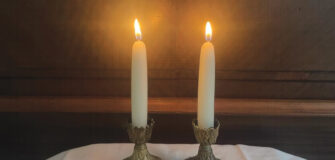
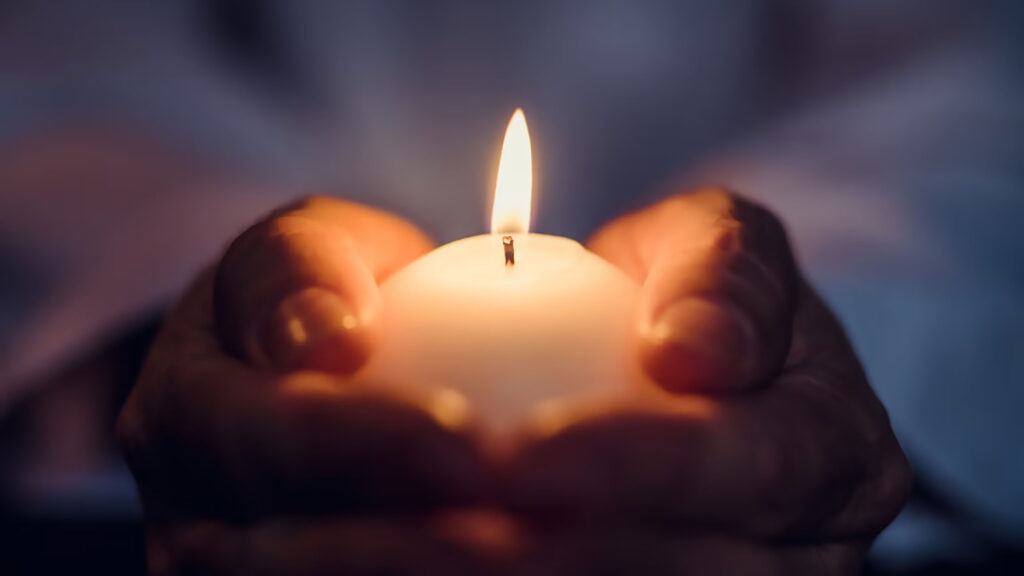
The Baal Shem Tov, founder of the Hasidic movement, was known for his love of light. His disciples would light candles whenever they knew he would be in their midst. However, on one frigid evening, they found only one candle. When the Baal Shem Tov learned of the shortage, he instructed his students to be creative. He told his disciples to collect the many icicles hanging from the roof of the study house.
Then, the icicles should be arranged in the same fashion as they would the candles. Known as “ice candles,” the students lit each icicle and, miraculously, within seconds, the entire room filled with light. In what first appeared as the darkest, coldest, despairing of nights transformed into a moment of hope. But sparks only emerged for those who could believe in the unimaginable.
For those experiencing extreme grief, a way through may seem impossible. For those living in fear, wondering if they can safely walk the streets outwardly wearing a Magen David, a different future feels untenable. Thousands of miles away, the heartache in Israel pierces our own, and every presented scenario towards “victory” is laced with uncertainty.
Personal or communal struggles, the air feels potent, heavy with struggle, loss, anger, hopelessness. Forget a cold winter night. Many of us feel like we are trapped in a blizzard. An avalanche. No way out. Frostbite voraciously eating at our souls. Icicles gleaning rooftops wherever we look.

How do you transform ice into fire? Scientifically, it seems that alone, ice is ice. There is no way ice can spontaneously combust into fire. Fire needs three elements to burn: fuel, oxygen and heat. If you add calcium carbide to ice, gas is generated. Add heat to the gas, and fire is produced. Voila. Fire that exists within ice.
The chemistry is perhaps the most powerful piece of the lesson. For a spark to burst forth, a change element must be introduced. Ice and fire won’t exist unless fuel and oxygen are present. Ice, oxygen, fuel and heat: Fire can’t help but ignite. Ice fire.
The life metaphor is uncanny. Hope isn’t a magic trick. One can’t be immersed within their frozen state and expect immediate thawing. But as a first step forward, we must allow breath to be present. Meaning, there needs to be a desire to keep breathing. To let the chest rise and fall, step out of bed and see the beginning of a brand new day. A willingness to live.
It is with breath in which God created human beings. “God formed the human from the dust of the earth, blowing into his nostrils the breath of life: the human became a living being” (Beresheet 2:7). Breathing is the greatest gift to humankind; creation begins with this act. In return, when we choose to take one breath after another, we join God as co-creators, reminding ourselves that every movement begins in this exact way. Breathe in, breathe out.
The rabbis in the Talmud instructed that each morning we should recite the following blessing: “My God, the soul you have placed within me is pure. You formed it within me. You breathed it into me. And you guard it while it is within me” (Berakhot 60b). God sees the preciousness of your soul, a soul constructed through divine spirit.
There is a direct link between our inhales and exhales with the Holy One of Blessing. Perhaps we will find additional strength and motivation to overcome the paralysis of the day and the imprisonment of our mind if we remind ourselves that each breath is connected to my Creator. I was given this holy breath not only to exist but also to make my imprint within this world. And as long as the physical act of breathing is within me, God will guard me, encouraging me to do a little more. My breath is my cue that there is more in this world left for me to do.
The chemistry experiment of achieving hope now needs fuel. An outside element that sits on the ice that begins a reaction. Oxygen is present, and a reaction is beginning to form. No spark yet in sight, but change has started to take place.
The Kotzker Rebbe, an 18th century Hasidic rabbi and teacher, was famous for his insights on change. He would stand in front of his students and stop mid-sentence while giving a lecture. He would fall silent and begin speaking again. The students grew frustrated and eventually asked their teacher why he deliberately taught in this manner.
He responded with one of his most famous teachings: “The truth is the narrowest of all paths. Any deviation — even by a hair’s breadthleads you away.” Meaning, a small change can lead you toward a direction you never intended and, conversely, toward a direction you never thought possible. One path might take you further from truth, and another one, closer. But it is the movement, even an intentional pause, that causes the reaction to take place.
The Baal Shem Tov offers a similar view. He told the story of a wagon driver who didn’t know how to pray. The man would get up every morning and pray the letters of the aleph-bet, the Hebrew alphabet. And he would whisper to God, “Master of the Universe, I don’t know the prayers but take my letters and arrange them as you wish.”
While his students were shocked, the Baal Shem Tov explained that even the man’s act of offering mere letters shifted the heavens above. Small acts, small gestures, small expressions have the power to be the catalyst we need to cause the change we pray to feel. The change we need to see.
But finally … the flame. We are breathing; we have enacted a small change for growth to take place. The only ingredient missing is the striking match to see fire where we never imagined. And this is where I believe hope cannot be created in a vacuum. You provide the breath; you provide the small acts.
And the community that is built around you must symbolically offer the match to light that first flame. The clergy, staff, laypeople, worshippers — we must act as mirrors, enabling those around us to see a fiery, passionate soul who may have otherwise been hidden from the eye of the beholder.
What does it look like to strike a match for another person? A few examples: Tell your children a strength you notice, one that is unique to who they are. Look at a fellow congregant and compliment something in their personality that you find admirable. Share with a friend or colleague ways they inspire you to be and do better. Mention to a mourner how their loved one’s spirit stays within you as well.
Without exaggeration and certainly with honesty and authenticity, be the mirror. A mirror that allows another person to know they are seen in this world, and their courage, determination, passion and love are some of the first qualities you notice. You have now struck the match. And watch as the flame begins to penetrate the ice.
It sounds simple. It is anything but. The world is a fragile place with many people cowering due to constant pressures, deep depression and nightmarish situations. But that is why we are given the High Holy Days year after year.
To say to each other, our hearts aren’t meant to remain covered by ice. Frozen in time. We remind each other of the power of our breath, the magic that comes with a small ounce of change, and the comfort felt when another helps us strike a first match.
Breath by breath. Act by act. Spark by spark.
Ice fire. Ice candles.
May it be a year of igniting hope. God knows we need it.
Shana Tovah