




The Klezmatics – From LA to the East Village

The Klezmatics Celebrate 40 Years of Klezmer
By Ayala Or-EI
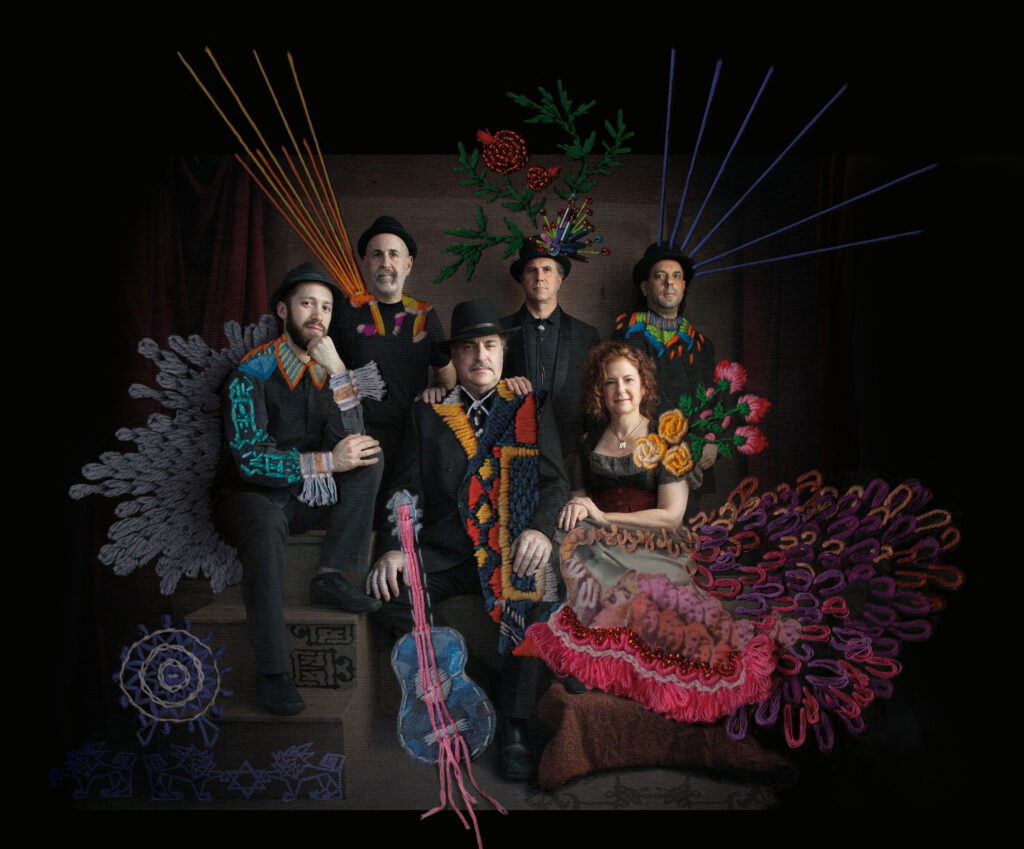
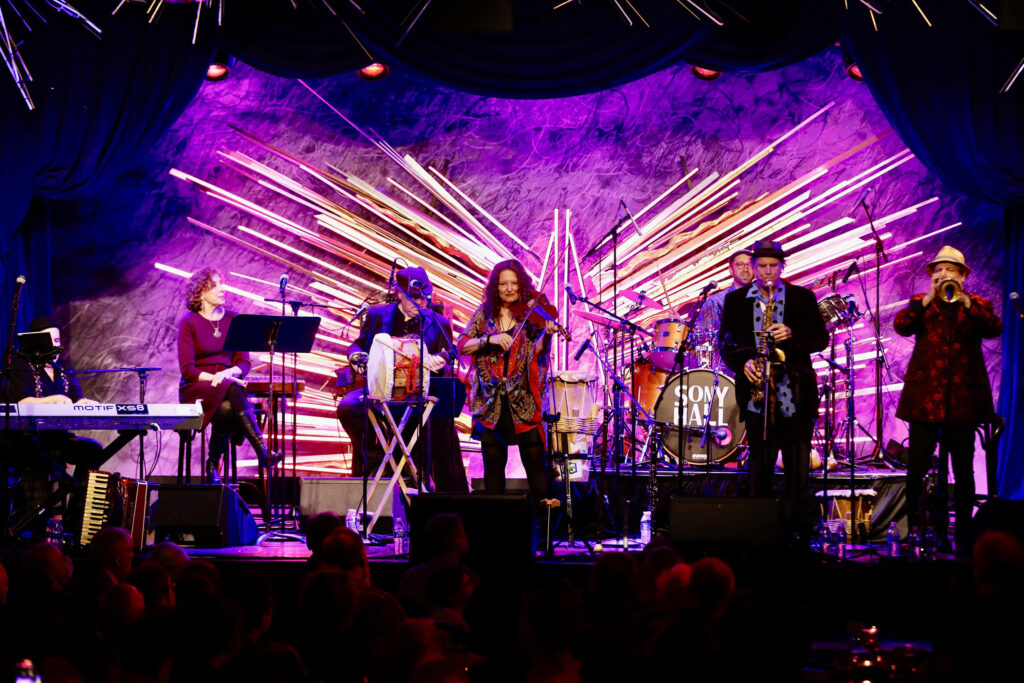
In just a few months, The Klezmatics, perhaps the most well-known klezmer band in the world, will celebrate its 40th anniversary. The band has performed in more than 20 countries and won a Grammy Award in 2006 for Best Contemporary World Music Album for “Wonder Wheel,” featuring the lyrics of Woody Guthrie.
“We didn’t have in mind that it would be a creative outlet for us in a way that it became,” said Lorin Sklamberg, the band’s co-founder.
In high school, Sklamberg played in a band that performed Israeli folk dance music, but they also played some Yiddish instrumental music, and his experience with it was solely as functional music and not for concerts or for making recordings or anything like that.
When the band was formed in 1986 in New York’s East Village, they were young musicians in their 20s who thought it would sim ply be a fun way to earn some extra money playing at weddings and bar mitzvahs. However, The Klezmatics quickly became a sought-after band, known for blending traditional Yiddish melodies with jazz, punk, gospel and folk.
They appeared on television shows, including PBS’s “Great Perfor mances” with Itzhak Perlman, and they’ve collaborated with renowned artists such as Israeli singer Chava Alberstein, Arlo Guthrie and Al len Ginsberg, all while bringing their genre-blending sound to stages around the world.
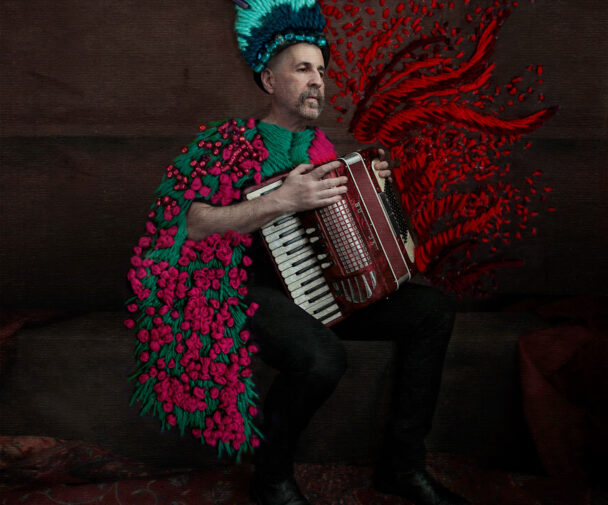
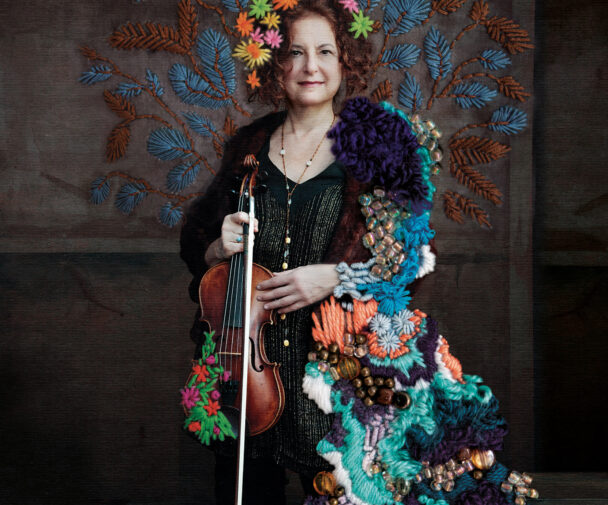
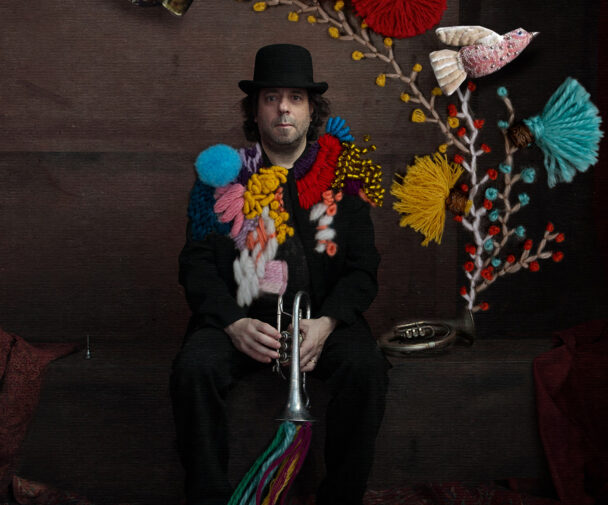
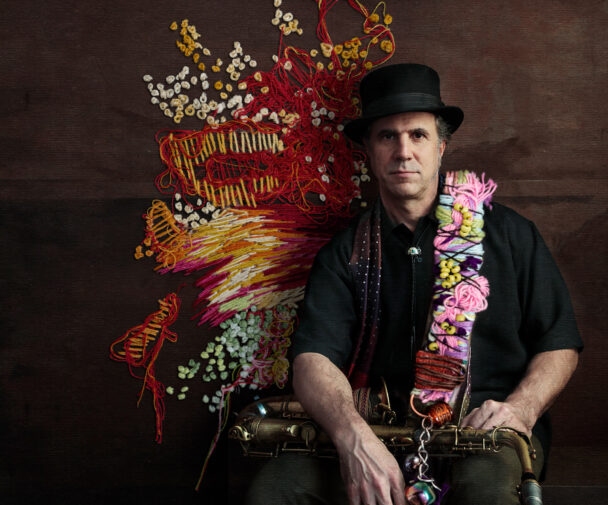
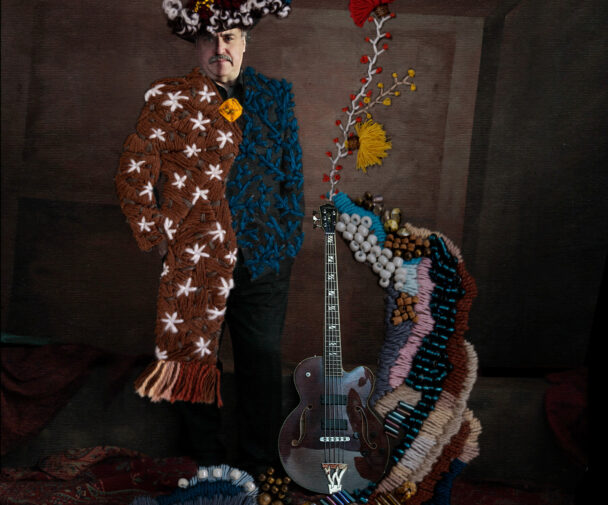
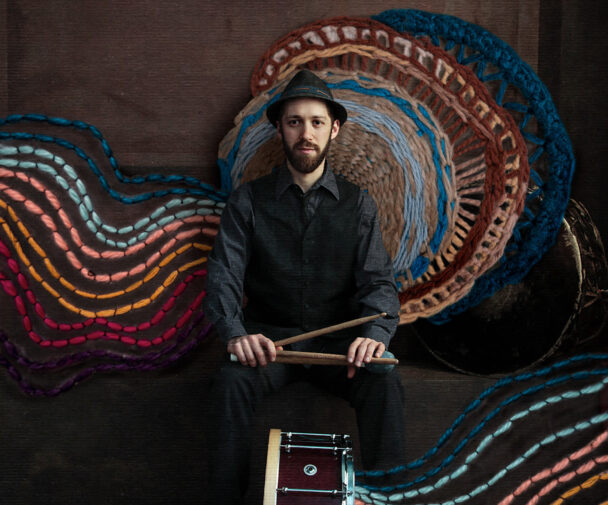
One of their most notable collaborations came with members of the Gutries (or Gutfreund) family, renowned for preserving classic Yiddish and klezmer songs. Through this partnership, The Klezmatics began recording traditional compositions alongside contemporary arrangements, bridging generations of Jewish music. By reinterpreting the fam ily’s songs, they not only preserved historical tunes but also introduced them to a wider, modern audience. These collaborations added authenticity and depth to the band’s repertoire, connecting the energy of the East Village scene with the heritage of Eastern European Jewish music.
While early albums focused on revitalizing traditional klezmer tunes, later projects explored experimental fusions, including politically charged songs, Jewish liturgical music, and collaborations with artists from completely different genres.
Albums such as “Shvaygn, Men Ken Lebn” (1988) and “Rhythm & Jews” (1990) reflected their early energetic revivalist style, while “Possessed” (1997) and “Rise Up! Shteyt Oyf!” (2003) demonstrated their ability to blend klezmer with punk, jazz and global sounds. Their Grammy Award-winning “Wonder Wheel” (2006), featuring the lyrics of Woody Guthrie set to klezmer arrangements, became a landmark project, illustrating the band’s commitment to storytelling and social consciousness.
Some of their standout songs include “Bay Mir Bistu Sheyn,” “Fisherlid” and “Mizmor Shir Leyom HaShabbat,” showcasing both their mastery of traditional klezmer and their inventive modern interpretations. Collaborations with the Gutries family brought pieces like “Der Gasn Narr” and “Zol Zayn Mit Yidn” to new audiences worldwide.
Sklamberg, a Los Angeles native, spoke with JLiving from his home in New York, where he moved in the early ’80s.
JLiving: Where did you grow up in L.A., and did you listen to Jew ish or Yiddish music at home?
Lorin Sklamberg: I grew up in Monterey Park in an area that was, back then, a heavily Mexican American community, and at the time there were enough Jews in that part of the city to sustain two synagogues that were both conservative and were an equal distance from where I lived. I grew up like most kids who were born in the ’50s and ’60s, with access to Israeli culture, as being presented as my own.
This was sort of a reaction to the Holocaust and World War II, that everybody turned their focus toward Israel, but in reality, Israeli culture isn’t my heritage. It’s something that I certainly enjoyed a lot, and certainly there was a lot of influence artistically with Israeli popular music culture, certainly a lot of influence from Hasidic music or from European or Eastern European music and such. And of course, also Mizrachi and Sephardic music and all those sorts of things.
But as far as my own heritage, I heard very little of it, or I would hear things, but I would have no idea that they were actually connected to my heritage. Things in the United Synagogue Youth or Camp Ramah, and also in shul. A lot of the things that we sang were Hasidic or mostly from Chabad Lubavitch, but no one explained that there was another tradition of music that was still being practiced. I had to discover that for myself, and it didn’t happen until I left L.A. and came to New York and started to realize that this is where I belong, as far as what I was going to do with my life and my career, and so I was able to connect the dots.
The Klezmatics have been part of the resurgence of Eastern European Jewish culture, certainly in the United States and in Europe, and now we’ve had two or three generations grow up being able to hear this music played actively, the songs being sung, the language being spoken, and now there is a multi-generational literacy that exists that wasn’t there when I was growing up, so it’s gratifying to have been part of that possibility.
JL: You’ve been working together for so many years. What keeps that creative spark alive within the band?
Sklamberg: I think partially because we’ve been working together for so long and we have an ongoing musical partnership, so we write for each other’s voices, whether it be a literal voice like my singing voice or other people’s instrumental voices. We’re fortunate that we’ve developed this rapport with each other and continue to be mutually inspired by each other.
JL: The Klezmatics have always managed to honor tradition while staying fresh and relevant. What’s the secret to keeping this music so relevant for four decades?
Sklamberg: I think we were encouraged early on by our record label to speak through this music in our own voices as individuals, so I think that’s been part of it. We’ve always sung about what we believe and about making the world a better place and about anti-racism and anti-fascism and human rights issues, things that are relevant to us that we know have made a stronger impression when they’re done through music, so I think that’s been a driving force behind what we’ve chosen to do.
JL: You’ve been recording and performing since the days of cassettes and CDs, and now you’re on Spotify and get all over the world.
Sklamberg: Actually, our first album was vinyl, so we’ve come full circle. It’s interesting because what happened with the advent of the compact disc and somewhat also with cassettes is that they don’t have the time limitations of an LP, so suddenly you saw what was around a 45-minute document. A lot of pop records were shorter than that. The classic American country album would’ve been something more like 35 minutes, but when people were able to put up to 80 minutes on a CD, it affected the length of the musical statement of an album.
For instance, our first album fit on an LP, but the second one was an hour and five minutes. When we went back to reissue “Rhythm and Jews” for the LP reissue, we had to make some choices about cutting some of the material to fit on an LP, so we sort of went backwards.
Sometimes I think that the limitations of length on an LP are actually, in a way, healthier for making a musical statement because it’s restricted, and so you might be more inclined to distill what you’re trying to say rather than feeling like you have to fill up an hour and 10 or an hour and 15 minutes of space. I can see the wisdom in going back to making a shorter musical statement with an album.
JL: What did you do with all your past records, cassettes and CDs? You probably have a huge collection.
Sklamberg: We have an archival collection at the YIVO Institute for Jewish Research, where I work. All of our material, all of our posters and programs and radio recordings and video and all sorts of things are stored there. As far as the band’s history goes, ideally, it would be available here in the future for people to come in if they want to know what the band was about.
JL: On Spotify, you can actually see where your music reaches people around the world. Did anything surprise you about where people are listening to you?
Sklamberg: I don’t think anything would surprise me at this point. I haven’t checked out that feature yet, but I know it’s possible now to see that sort of information. We’ve been working on our 40th anniversary. We have been serious about renewing our connection with the musical world. I think people are now more aware of the band than ever because of this kind of effort on the part of our band members.
JL: It’s interesting to see how a band with such a Jewish name like Klezmatics became so popular among non-Jews.
Sklamberg: Our audiences have always been diverse. We just did a tour in Scandinavia and Finland, and the audience was diverse as far as age and Jewish and non-Jewish. We do draw on some spiritual themes, but by and large, we think of ourselves as a secular band. That said, I think that the Jewish world is so intertwined that you can’t really escape the religious part of our heritage, even if you are a devout secular person, especially with Yiddish music. I think it’s there whether or not you want it to be — it’s definitely connected.
JL: Did the events of October 7 affect you at all? Did you experience any cancellations? Sklamberg: It hasn’t affected us directly in that way, and people don’t perceive us as a band that has an association with Israel, except to say it’s possible that over the last couple of years, there’s been less work for us and that several places where we play — in Canada, for instance — there have been a lot of anti-semitic sort of activities, and so we’ve certainly seen things like that, where events we’ve been involved with have been more modest or that there were fewer of them. In New York, there have been a lot of protests and public displays of support for different factions and such, but on the other hand, I like to be hopeful about things.
JL: What’s your new album about?
Sklamberg: It’s all songs about social change and comfort and the idea that we’re trying to inspire people to be a part of, for lack of a better phrase, the peace process. We’re drawing on everything from older songs that we’re repurposing to things that we’re writing that are dedicated to current events, and so it’s been inspiring for us to create a contemporary musical statement.
JL: Can you elaborate?
Sklamberg: You can talk about Israel-Palestine, you can talk about Russia-Ukraine and about the immigrant struggle, the border issues with the United States and Mexico, and these sorts of things. It’s like the song that was sung by Woody Guthrie called “Deportee” from the 1940s. We have a version of that song that’s trilingual — in English, Yiddish and Spanish, and it could have been written today.
It’s a song about a migrant worker who is being sent back to Mexico and dies in a plane crash. It’s based on much of Woody Guthrie’s material and on true events. He was struck by the fact that these people, who have families and identities and work for a living, in fact, working on crofts to feed people, were basically reduced to being called deportees. They weren’t even referred to by their names.
JL: Do you come back to L.A. for a visit sometimes?
Sklamberg: I’m always happy to come back. I have family, friends and the familiarity of the city. It’s always like a homecoming for me because I lived in L.A. till I was 27. I don’t know if it’s nostalgia, but I feel a certain comfort in being back where I grew up. I think it’s probably true for a lot of people. There are things that are unique to L.A. There are a lot of places where I used to hang out that are gone or have changed, and it’s too bad, but there are still small pockets of Yiddish activity, which is lovely.
On Sunday, Dec. 7, The Klezmatics will perform at the Younes and Soraya Nazarian Center for the Performing Arts on the campus of California State University, Northridge, as part of their world tour celebrating their 40th anniversary. The concert, “Happy Joyous Hanukkah,” will include Hanukkah songs as well as songs from their new album, “We Were Made for These Times.” The album includes multilingual repertoire and guest collaborations.