
LA Delis – Please Be Here Forever

Why Jewish Delis Have a Special Place in the Hearts of Angelenos
By Jacqueline Fitzgerald
Jewish delis are more than just restaurants, more than a reliable way to satisfy the stomach and soothe the soul. They’re a connection with the past, a rush of fond memories, a place to gather, and a vital part of Jewish culture and identity. And every day in Los Angeles, the people who run them perfect the delicate balance of staying true to tradition and keeping up with changing tastes. Talk about a tall order.
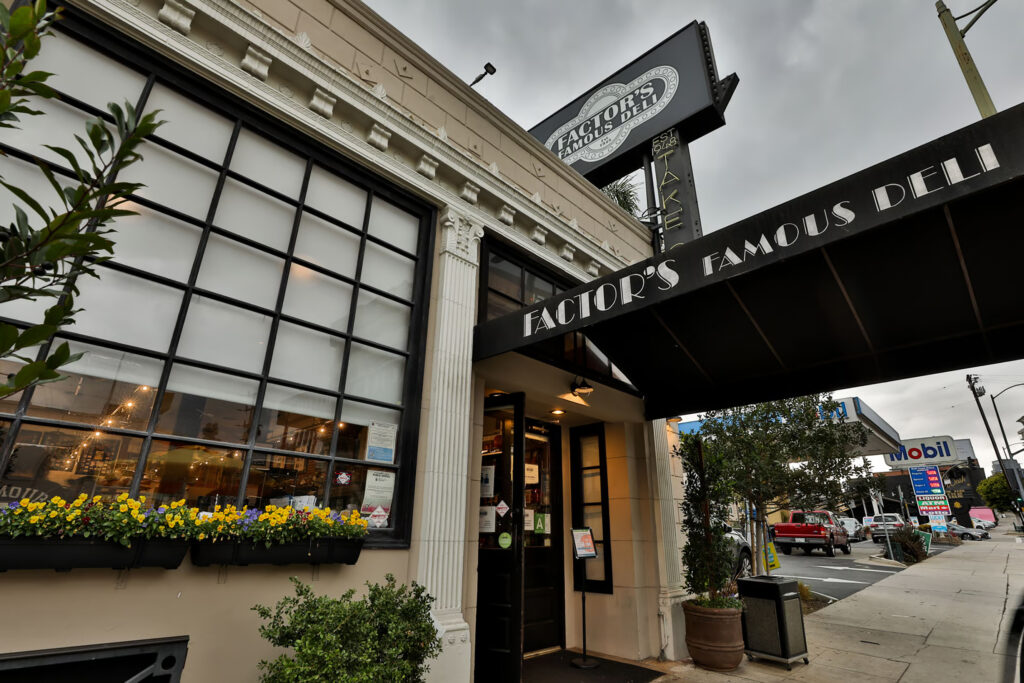
“Delis represent family, friends, culture, good times, bad times, and everything in between — they represent life,” says Suzee Markowitz, who, with her sister Debbie Markowitz Ullman, runs Factor’s Famous Deli, on Pico Blvd., which opened in 1948. Their parents bought the place in 1969.
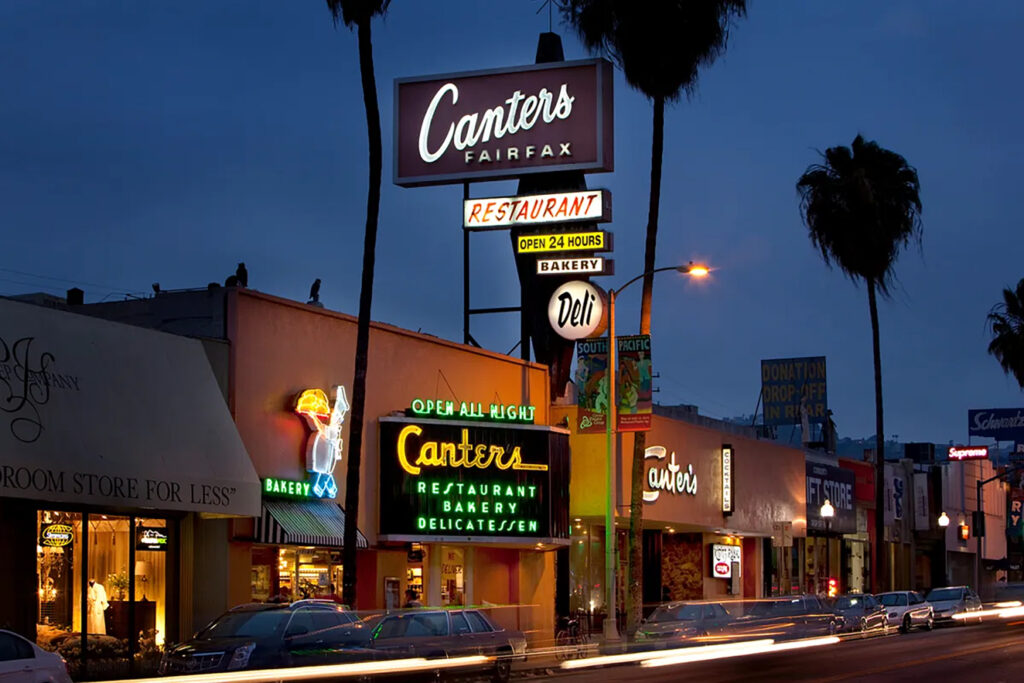
“The key is comfort food,” says Jackie Canter of Canter’s Deli, on Fairfax Ave. “It’s a nostalgic experience. People who came with their parents or grandparents now bring their kids and grandkids, that’s four generations.”
Her grandfather started the business in 1924 in Jersey City, New Jersey. In 1931, he and his brothers set up shop in Boyle Heights, later moving to Fairfax Avenue.
Of course, New York City was the birthplace of the Jewish deli in America and the backdrop for its heyday. In the 1930s, the Big Apple was home to more than 1,500 Jewish delis. A dizzying variety of menu items, snarky service, lively chatter, and sandwiches piled high with red meat on rye kept customers coming back for more. “In New York, there was a romance of excess. It’s a skyscraper city, everything is overblown and cartoonishly exaggerated,” says Ted Merwin, author of Pastrami on Rye: An Overstuffed History of the Jewish Deli.
Midtown delis in particular played into the glitz and glamour of celebrity culture, think neon lights, autographed photos of famous pa trons, sandwiches named after stage and film stars, servers who’d once had, or were seeking, showbiz connections.
While New York was the epicenter, Jewish delis thrived in cities across America. The geography of Los Angeles meant the delis here were fewer and farther apart, and from the beginning, they likely served a more diverse clientele than their East Coast counterparts, says Merwin. “Jewish food was less a part of the fabric of LA the way it was in New York,” he says. “New York had such a Jewish flavor to it that LA didn’t have to the same degree.”
Says Markowitz: “People always tell us Factor’s reminds them of a New York deli, which is a big compliment.”
New York and Los Angeles shared a similarity in terms of celebrity connections. As Hollywood luminary Orson Welles once declared: “There could be no picture-making without pastrami.”
The iconic diner scene (“I’ll have what she’s having”) in the 1989 movie “When Harry Met Sally” was shot at Katz’s Delicatessen on NYC’s Lower East Side, which opened its doors in 1888.
A 2012 documentary called “Lunch” highlights a group of comedy giants, including Sid Caesar and Carl Reiner, who, for 40 years, gathered at Factor’s to nosh and noodle on new ideas. Besides drawing in directors and writers, Canter’s has been a longtime magnet for musicians. Before Saul Hudson became Slash of Guns N’ Roses, he spent many hours working and hanging out at Canter’s.
Even today, A-listers still frequent their local delis. “We get a few that are here weekly, and our whole staff knows they want their privacy,” says Ron Magnin, of The Nosh, on Santa Monica Blvd., in Beverly Hills, which dates to 1975. (He and his partner bought the spot 20 years ago. They also own Mort’s Deli in Tarzana and Agoura’s Famous Deli.) “We have a strict policy, and we don’t mess with them. That’s probably why they come here,” says Magnin.
To be sure, delis were (and are) a favorite place to relax and schmooze, mix and mingle. But in the years after World War II, they began to dwindle. “The numbers radically shrunk because of the evolving demographic of the Jewish people,” says David Sax, author of Save the Deli: In Search of Perfect Pastrami, Crusty Rye, and the Heart of Jewish Del icatessen. He points out that fewer people were immigrating to America from Eastern Europe, industries that supported the delis went through major changes, and a generational shift took place. Instead of passing the businesses on to their children, deli owners could afford to send their kids to college so they could pursue other careers.
More recently, many restaurants, including delis, have shuttered in the wake of the pandemic. It’s a tough business, and high food costs are especially hard on delis because they typically make so much from scratch and focus on high-quality ingredients. But while there are fewer delis than ever before, their role in Jewish life has arguably never been more important.
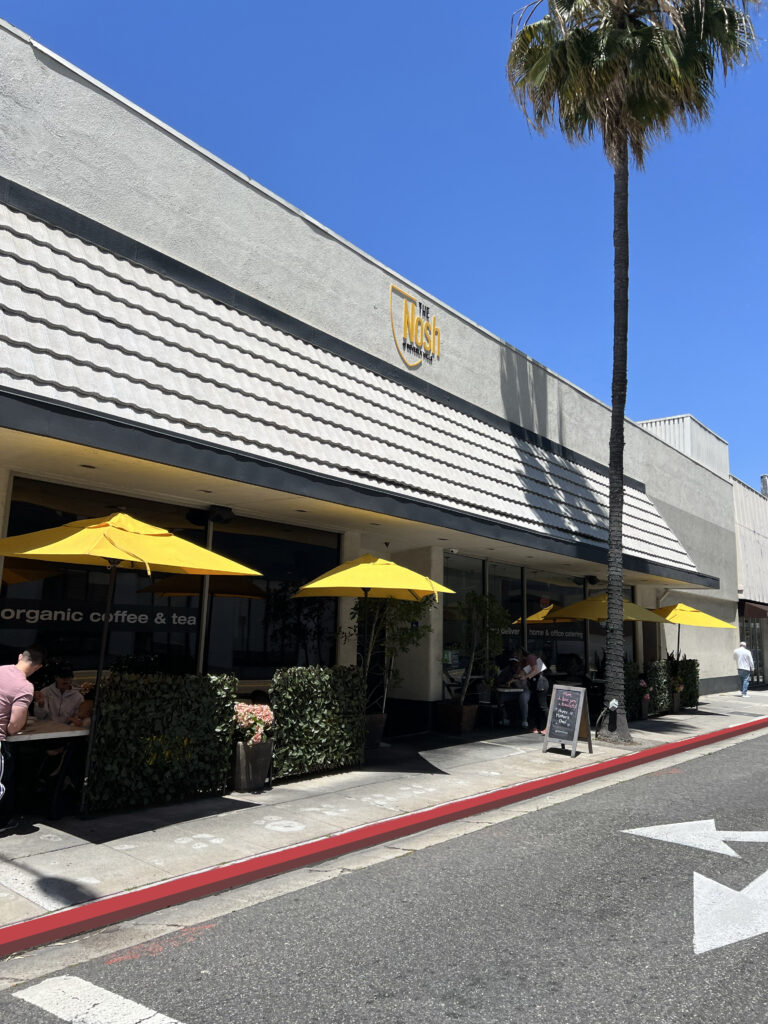
They are a vital part of the social fabric. “My favorite part of the job, other than eating, is getting to know and become friends with customers. I’ve met a ton of friends through here, even my girlfriend,” says Magnin. “I love meeting people and talking to people. I love the fact that we feed them and make them happy. It’s a very comforting place, so we get a lot of people who eat here five or six times a week. It’s almost ‘Cheers’-y.”
(Incidentally, one of those people is his mom. “She’s here every Tuesday for lunch with her friends. She has more friends than I do,” he says.)
Canter agrees. “The people who come here seven days a week, they all know each other. Everyone gathers, they say ‘hello, how are you doing?’ ”
Canter, 64, has been meeting and greeting people her whole life. “When I was 2 years old, they started training me how to count change. My father worked seven days a week. Now I work seven days a week.”
Locals looking to curb late-night cravings know they can get food around the clock at Canter’s, which stayed open during the Rodney King and George Floyd protests. “The people who had nowhere else to go came here,” says Canter. “They felt safe here. And when the National Guard came, we fed them too.”
Delis provide sustenance, literally and figuratively. “More than any other kind of restaurant, we are really part of a community,” says Markowitz. “People say, ‘Thank God you guys are still here. Please be here forever.’ ”
They pride themselves on just that: being there for their customers. “We are the go-to for every phase in the life cycle — the bris, bar and bat mitzvahs, birthday celebrations, every holiday, and funerals — as well as the ups and downs of daily life. If your friend is sick and you want to send soup, you don’t call just any restaurant; you call a deli,” says Markowitz Ullman.
For weddings and other events, she started a full-service catering company about 30 years ago. (Catering, take-out, and Goldbelly account for a healthy chunk of their business.)
The sisters agree it’s a labor of love. “There’s a lot of emotion,” says Markowitz. “I cry tears of happiness, tears of sadness. We care about our customers; they are people we’ve known for years. Kids grow up here. They go away to college and, when they’re back, they come here straight from the airport. It’s their home away from home.”
Says Markowitz Ullman: “We feel like we have a hundred sets of parents and a hundred sets of grandparents.”
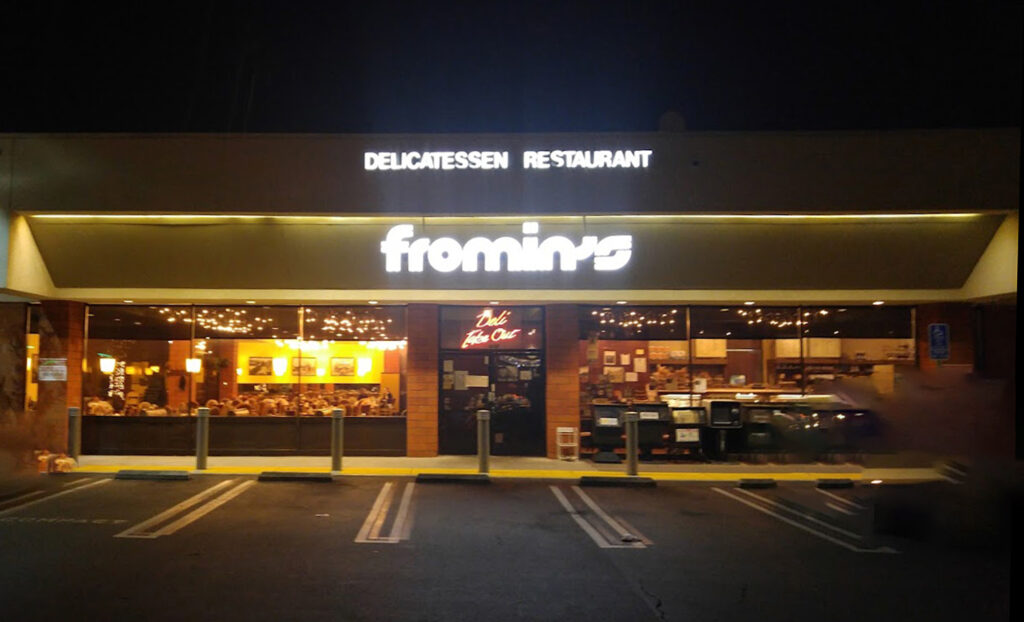
Bruce Stein, general manager of Fromin’s, on Wilshire Blvd., in Santa Monica, echoes the sentiment. “We serve a purpose in the community, and we’re an important part of the Jewish community mainly because of the family atmosphere we provide. We make customers feel like they’re part of the family. It’s like an extension of their home, which Jewish delis have always been if they’re run properly.”
People view Fromin’s, which opened in 1978, as a gathering place, says Stein. For example, several regular customers come not only to eat but also to play mahjong.
Similarly, Factor’s holds events such as bingo nights and trivia nights, which are often sold out. “People love to come together, and they want to be part of a community activity,” says Markowitz Ullman.
Markowitz chimes in: “The beauty of a deli is you never know who you’re going to run into, so it’s always a big party.”
Merwin notes that in the early days of Hollywood, delis were places outside a synagogue where Jews, many of whom were very secular, could express their Judaism with other Jews.
Delis are also a space for mutual support in the aftermath of antisemitic violence on the world stage. “Especially since October 7, 2023, Jewish people feel a need to speak to other Jew ish people about what they’re feeling,” says Mar kowitz.
Like many legacy businesses, delis now face the challenge of attracting younger, health-conscious customers without alienating their loyal following. One major change is including menu choices to accommodate special diets such as vegetarian, vegan, or gluten-free. Not surprisingly, salads, leaner meat, and lighter fare top the list of healthful offerings. At Fromin’s, for instance, turkey is the top-selling item. Factor’s uses butter and salt more sparingly than in years past.
At The Nosh, Magnin says innovation is part of survival. “We try to change with the times just enough to be different from a typical Jewish deli. There are things we do that a lot of delis don’t, like hummus and baba ghanoush. We had a pastrami breakfast burrito and pastrami tacos. About 18 years ago, we added shakshuka. It was my partner’s mom’s recipe, and she taught us how to make it. It’s a great seller and a great dish.”
He acknowledges they are stretching the concept of what constitutes a traditional delicatessen. “We’re not 100 percent deli,” he says. “We’re more like a deli, diner, and coffee shop. The Nosh is not included in the OG deli talk — Canter’s, Langer’s, Agoura’s, Mort’s, Factor’s, Nate & Al’s. The Nosh is more of a restaurant with Jewish food as opposed to a Jewish deli.”
Meanwhile, other deli restaurateurs are finding ways to make their mark. Trisha Langer spent 14 years working with her father, Norm Langer, whose father, Al, opened Langer’s Delicatessen on S. Alvarado St. in 1947. (Nora Ephron compared their hot pastrami sandwich to a symphony orchestra.) Carrying on the family tradition, in 2018, Tri sha and her husband opened Daughter’s Deli on Sunset Blvd., in West Hollywood.
In Highland Park, Belle’s bar menu boasts a pickle martini. Henri etta in Echo Park draws inspiration from the salumerias and cucinas of Rome. The Bad Jew, a pop-up, specializes in pork dishes.
Merwin believes delis will always be around in some form because the food is still something that people really enjoy, and it’s not food that’s easy to make at home.
Magnin sees plenty of opportunity to think outside the box. “We have blank canvases here,” he says. “We want to be creative, to bring a different element to something that has been around for a lot of years, as well as taking the older items and giving them a new twist. I think there’s something really fun about that.”