



Your simcha, your story, your menu

Elevated and Eclectic
By Jacqueline Fitzgerald
By-the-numbers parties belong to a bygone era. Today’s celebrations are one-of-a-kind productions designed to reflect the personalities of the guests of honor. At weddings, b’nai mitzvahs, and other special events, standard must-haves are being eschewed in favor of creating eclectic experiences that capture the person’s (or couple’s) vibe and tell their unique story.
For example, a bride and groom who love traveling might opt for a destination wedding or let their vacation itineraries inspire their celebration. “We might try to replay a memory – something they ate on their first date or something they discovered on their first trip together, represented in an hors d’oeuvre perhaps,” says Emanuele Ponzo of Crate ful Catering, who originally hails from Rome. “We can include a lot of different components to give a more varied experience to the guest. It’s more of a journey than just following a theme of Italian, French, or Mexican cuisine.”
When planning weddings and b’nai mitzvahs, the element of personalization extends to bookend gatherings: the rehearsal dinner or Shabbat dinner before the main celebration and post-event meals, such as Sheva Brachot festivities or Sunday brunch.
“With all the food over a few days, sometimes people feel like they’re on a cruise ship,” laughs Scott Tessler of Silver Spoons Catering, Inc.
While fancy parties at high-end hotels aren’t going away, there’s also an increased emphasis on somewhat-less-formal, yet still elegant affairs, perhaps with a pared-down guest list. These celebrations often feature small plates and family-style dining, says Josh Jackson of Great Taste Catering.
Michael Goldman, a partner at Silver Spoons Catering, says he has seen an uptick in catering events at people’s homes or at large houses their clients find through Airbnb.
The relaxed, homey vibe at the Milky Way restaurant in West Los Angeles draws customers for dining and for holding private events. “It’s very intimate,” says executive chef Phil Kastel. “It literally looks like someone’s living room and I think that’s very special to people.”
Opened in 1977 by Bernie and Leah Adler (mother of Steven Spiel berg), the kosher dairy restaurant is a staple of the Pico-Robertson neighborhood. Now under the ownership of the next generation of Spielbergs, the Milky Way uses seasonal produce and sustainably sourced seafood to offer vegetarian, pescatarian, and gluten-free dishes.
Though the Milky Way is a popular spot for parties, Sheva Brachot, and the occasional bris, Kastel says they don’t typically host weddings or b’nai mitzvahs because those gatherings generally have meat-focused menus. (Public events include book signings, family movie nights, and wine dinners.)
The restaurant can seat about 60 people, but recently did a day-after-wedding get-together for 85 people by seating them in two groups. Catered food for pickup or drop-off is another option.
Kastel led the Milky Way’s 2019 relaunch, following Leah Adler’s passing in 2017. “They didn’t want to just do the standard orthodox Jewish dairy food that you see up and down the Pico area. They really wanted to set themselves apart, so we created a new menu, but we wanted the family to make the decision about what stayed from the original menu, about those special recipes that were dear to them. The process was a lot of fun.”
Not surprisingly, there was a suspenseful twist. Kastel recalls a tasting with the Spielberg family (Nancy, Sue, Anne, and Steven). “There was a hilarious moment when Steven was eating the eggplant parmesan, and he called over my business associate because I was in the back cooking. He said, ‘This isn’t my mother’s eggplant parmesan. Do you know how I know that?’ She said, ‘I’m sorry, I don’t.’ And he said, ‘Because it’s better than my mother’s eggplant parmesan.’ As soon as he said that, we were like, we’re good!”
(Incidentally, Steven Spielberg’s favorite dessert is the carrot cake.)
Of course, the venue, décor, color scheme, lighting, flowers, and entertainment are key factors in creating a mood and telling a story, but catering still plays a crucial part in making an event memorable. Bryan Rafanelli of Rafanelli Events recently told Vogue magazine, “Food is emotional. When it’s presented beautifully and generously, it does more than feed guests, it sets the tone for connection, comfort, and celebration. {…}Thoughtfully styled stations encourage movement, conversation, and discovery, transforming dining into an experience rather than a seated moment.”
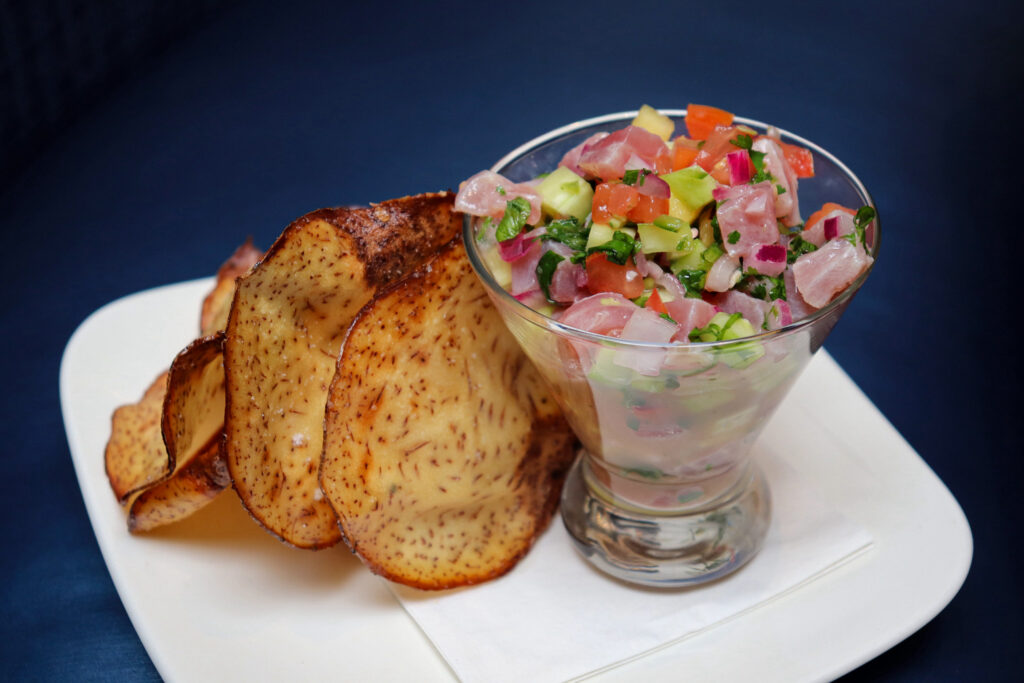
Elon Kviatkovsky of LA Kosher Catering, at Valley Beth Shalom in Encino, says people are seeking elegant and interesting touches, like unusual serving vessels used for passing hors d’oeuvres and fascinating plate design. “If everything is stunningly beautiful and the food is delicious, that’s a pretty big home run,” he says.
By the same token, if something goes wrong with the food, it’s a major negative. Says Ponzo: “It’s a very important job to make sure our clients are satisfied with the quality of the food and the quality of the service. If one rose was not perfect, nobody remembers. If something on the food side was not perfect, everyone remembers.”
The list of au courant food stations is extensive and ever-growing: su shi/poke or other seafood, burgers, pizza, pasta, meat carving, international fare, and more. Additionally, personalized cocktails and mocktails are on the upswing. For guests who get hungry later in the evening, it’s not uncommon for a food truck to make an appearance.
And for dessert? Rather than a traditional cake, the trend now is dessert stations boasting small bites of multiple sweet treats, such as a cake trio, cookies, brownies, lemon bars, or French pastries. Milk shakes, ice cream oats, and build-your-own ice cream sundae bars are a hit, especially at b’nai mitzvahs.
“We recently did mini apple pies in little containers with a dollop of vanilla ice cream on top, right next to freshly baked chocolate chip cookies,” says Kviatkovsky. “It was adorable and it smelled amazing. You could see people’s heads turning because all of a sudden the whole place started to smell like cinnamon-apple pie, caramel sauce, and warm cookies.”
Ponzo’s team at Crateful Catering makes gelato onsite — allowing guests to choose ingredients for a custom scoop. The trend isn’t limited to dessert. “People are going more and more with interactive things,” he explains. “Guests like to interact with the chef behind the station; they like to interact with the barman.”
Caterers agree it’s essential to accommodate guests’ requests for special diets. “You have to be flexible and always be prepared with a Plan B,” says Ponzo, adding that at a recent 600-person event, vegan orders almost doubled at the last minute. He’d thought the original order count sounded low and had extra vegan meals ready.
Sustainability, too, ranks as a top priority form man clients. Says Goldman: “It’s often the rst question they ask now: ‘What’s your carbon footprint?’ As the technology improves, we can be more sustainable — for example, we recently bought an electric van.” Also, Tessler says, compostable utensils have improved over the last couple of years, so they can be used for eating hot foods.
With more styles and choices available than ever before, it’s important to choose a caterer that understands what you’re looking for and with whom you can communicate. Both client and caterer should feel comfortable exchanging ideas. Kastel puts it this way: “If you came to the Milky Way and wanted fish and chips, I would steer you away from that. Fried fish is not going to translate well. Would salmon skewers translate well? Sure. Would halibut skewers? Sure. Would ahi tuna? Yes. Having someone who’s honest with you and who will tell you what’s going to work and what’s not going to work makes a difference in terms of having a successful event.”
Tessler says many of his customers are budget-conscious, so he likes to guide them to a good value — for instance, letting them know that sushi as a passed hors d’oeuvre is the most cost-efficient presentation compared with someone making it onsite. After all, says Goldman, one person can easily eat $100 worth of sushi if it’s right there in front of them, especially children.
Speaking of budget, Kviatkovsky points out: if a caterer’s price is too good to be true, that might be a red flag. “There’s a lot of stuff that goes into creating an event,” he says.
Careful planning (including what’s being provided by the rental company, like tableware and linens) and attention to detail also drive success. It’s vital to keep the caterer apprised of any changes as the event approaches and on the big day — even 15 minutes can be make or break when it comes to cooking.
Do research, read reviews, and talk to several caterers before making a final decision. And if you don’t click, move on to another vendor. “Make sure it’s a good fit in terms of food and personality,” says Ponzo, noting that he will say if he thinks a client is headed in the wrong direction. “It’s my food, it’s my brand, and we need to make sure we deliver to you 100 percent.”