

Mish and Malka

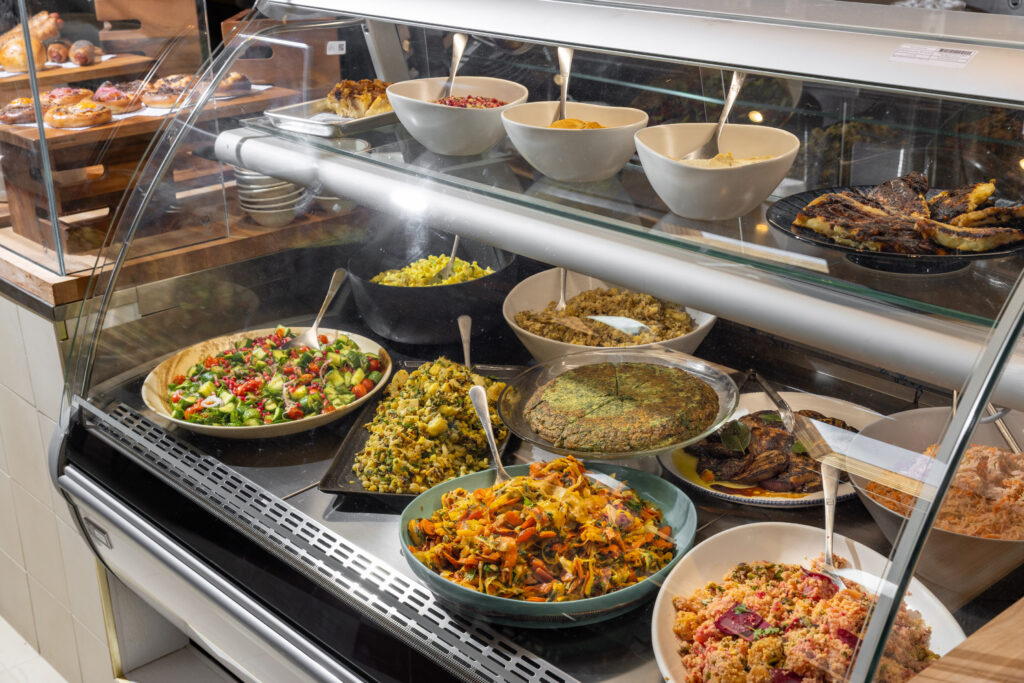
The city is hungry not just for great food, but for somewhere to belong.
By Sara Wilner
There is a particular kind of room that Los Angeles has been quietly losing for thirty years. Not the rooftop bars or the celebrity chef showcases; those keep coming, season after season. What has been disappearing is the neighborhood restaurant, the place where regulars show up Tuesday and again on Friday, where they know your order and you know the staff, where the food is not a trend but a reflection of the community being fed. The delicatessen. The corner spot that has always just been “there.”
Two restaurants opening in Los Angeles this year are, each in their own way, a response to that loss. They share no cuisine, no price point, no neighborhood. What they share is a genuine belief that a restaurant can be more than a transaction, and be a source of comfort and a home.
Mish is Eric Greenspan’s love letter to the Jewish delicatessen, opened on La Brea in June with wood-fired bagels, hand-carved pastrami, and a large community table that announces its intentions as you walk in the door. Malka is Eyal Shani’s celebrated certified-kosher full-service restaurant, making its long-awaited West Coast debut and bringing the Israeli chef’s ingredient-first philosophy to a city that has been ready for it for years. Together, they represent a strand of Los Angeles restaurant culture that takes community as seriously as cuisine and understands that the two cannot really be separated.
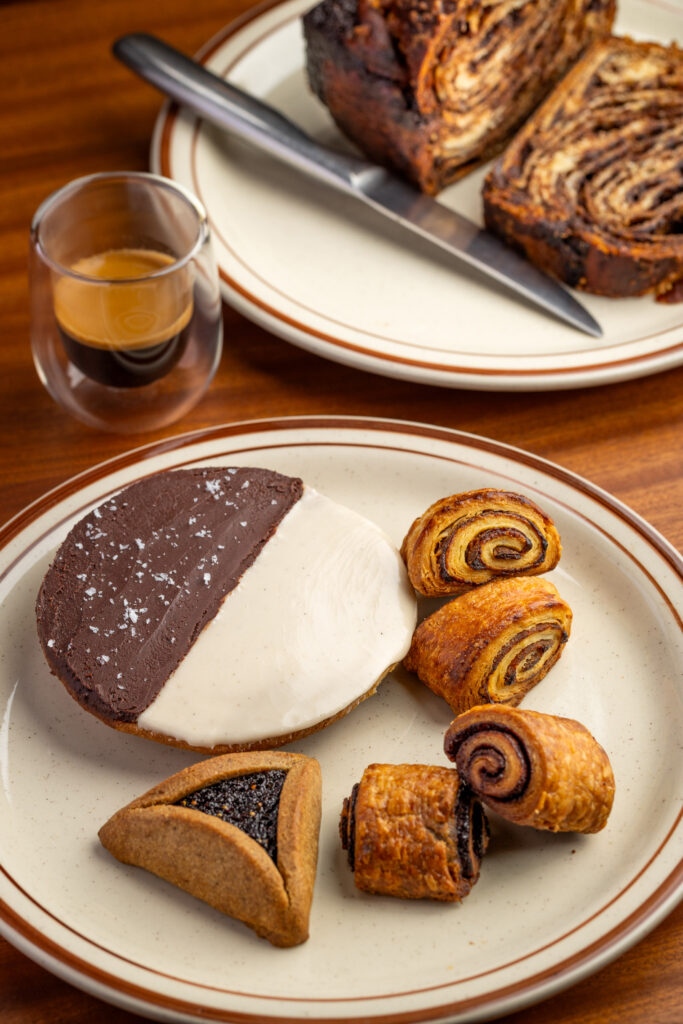
Mish – Eric Greenspan’s Long-Overdue Love Letter to the Deli
The word “mish” is Hebrew slang for “mishmash”: a little bit of everything, a beautiful jumble. It is the right name for what Eric Greenspan has built in a 4,000-square-foot mid-century masonry building on La Brea between 1st and 2nd Streets. The restaurant opened this June as a full-day establishment, part bakery, part deli counter, part sit-down restaurant, part cocktail bar. What it most resembles in spirit is the kind of Jewish delicatessen that used to serve as the beating heart of urban Jewish neighborhoods, the kind of place where you could linger over a second cup of coffee and discuss the latest mishegoss, where the food was not merely good but specifically, recognizably yours.
The first thing you encounter is the table: a 33-foot hand-carved slab of sustainably harvested old-growth claro walnut, running the length of the room like a declaration. “Bold is our specialty,” Greenspan says. “The delicatessen originated as a community center that served food. The table, to us, represents a return to that tradition.” Before a single bite, the table tells you what kind of place this intends to be: one where strangers sit beside each other, where the architecture of the space is also the architecture of its values.
The menu is built around hand-carved sandwiches from a bespoke smoking and curing partnership with RC Provisions: hard wood-smoked pastrami, rosemary roast turkey, and slow-cooked brisket, sliced to order on challah or rye. The bagel program, wood-fired and Montreal-inspired, boiled in honey water and finished in a live-fire oven, produces the kind of bagel worth making a detour for.
Then there is the Sab-ish: egg salad, hummus, grilled eggplant, and amba on a wood-fired bagel, a sandwich that could only exist at this particular cultural moment. Its construction draws a direct line from the Jewish-American deli tradition to the street food of pre-migration Iraq. Greenspan is deliberate about that lineage. “Mish draws inspiration from the entirety of the Jewish culinary diaspora,” he explains, “but through the lens of a traditional deli.” Is that a political act? He doesn’t see it that way. “There is no space for politics in a house of hospitality,” he says, though the culinary geography is intentional: a map of where Jewish food actually comes from and how far it has traveled.
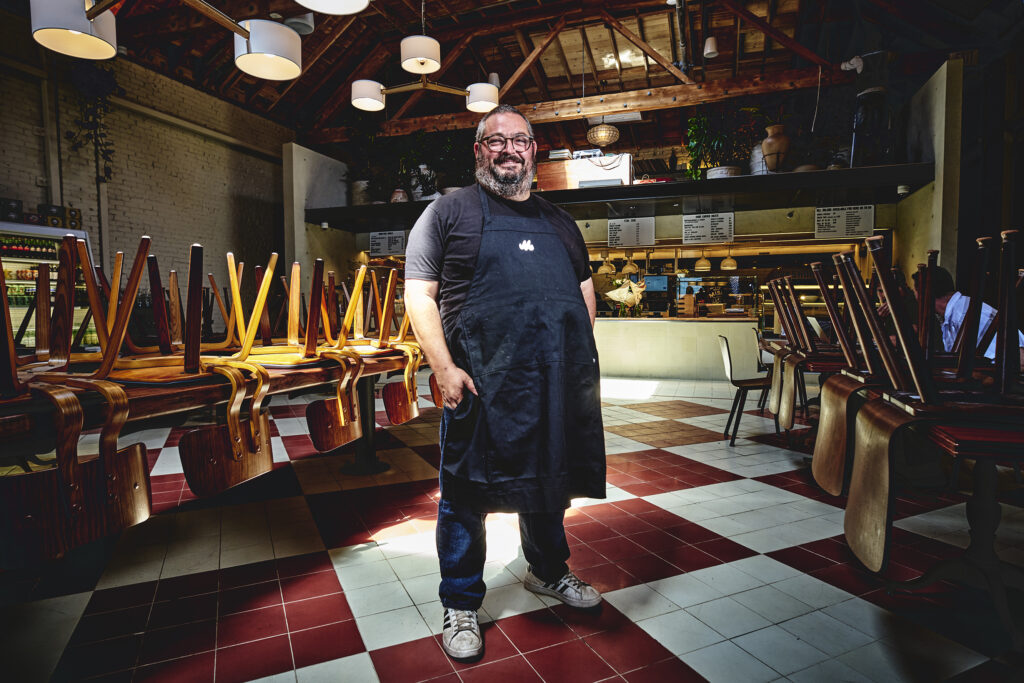
The broader menu extends into Schmaltz-Crisped Kreplach, Lemon Blintzes with blueberry jam and pistachio, Babka French Toast, and a Potato & Leek Kugel. The pastry program is led by Dara Yu, the youngest winner in Master Chef history. Beverages are overseen by Julian Cox, a four-time James Beard nominee, whose program spans coffee, cocktails, and the New York Chocolate Egg Cream, that is a proper act of restoration.
Greenspan did not build Mish alone, and he is candid about why. “A restaurant is only as good as the team,” he says, “and I’m comfortable enough with my understanding of the vision to not have the hubris of doing it all myself.” That humility extends to how he thinks about the deli as a form. The genre has been declared dead many times, and yet here he is, betting his next chapter on it. “I believe that Mish stands on the shoulders of giants, but we are certainly trying to advance a genre that hasn’t seen much change in 100 years of tradition. We want to return to the roots by embracing the communal feel of delis and rally against the diner-fication of delis — no pancakes here.” He continues: “This project is born out of passion rather than necessity, and we strive to unburden ourselves from tradition in some ways to meet the modern diner where they want to be, in terms of lighter fare, quality sourcing, and creativity.”
Opening Mish at this particular moment in Jewish communal life is something Greenspan has thought carefully about. “It doesn’t change what we need to be,” he says, “but it of course inspires us.” He sees the restaurant operating on two tracks simultaneously: a gathering place for the Jewish community, and a bridge outward. “Nothing brings people together like food, so if Mish can be both a rallying point for the Jewish community in the midst of a rise in antisemitism, as well as a bridge to share our culture with others to bridge differences, then this is the perfect time for this place to exist.” Not a deli as nostalgia. A deli as argument, for Jewish visibility, Jewish joy, and Jewish permanence in the life of this city.
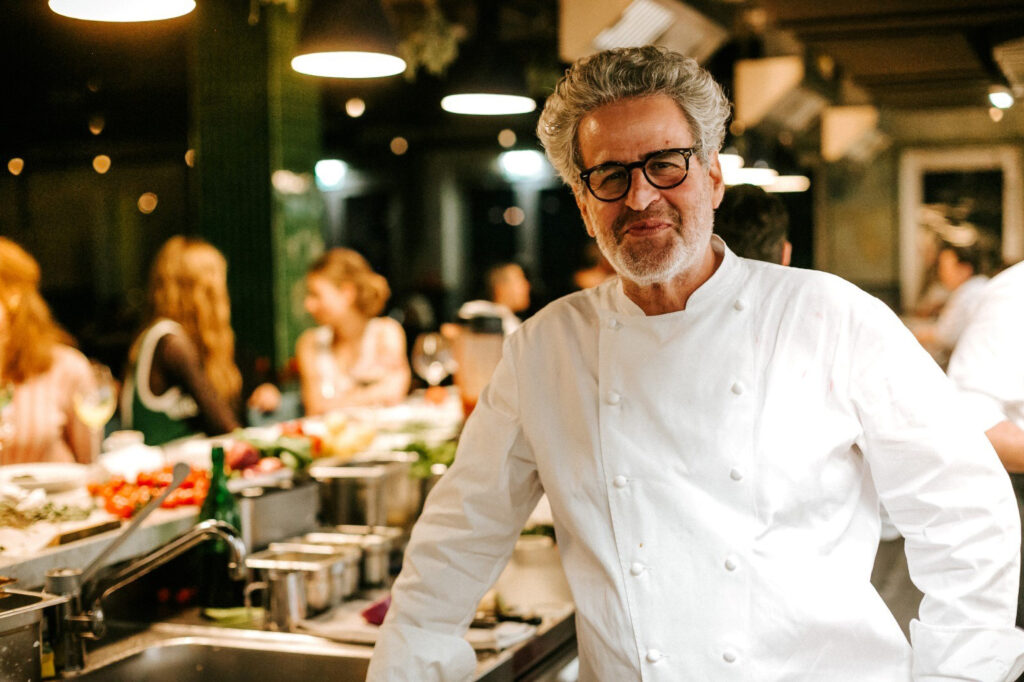
Malka – Eyal Shani Brings His Most Personal Restaurant to the West Coast
There is a word Eyal Shani returns to again and again when he talks about Malka: happiness. Not excellence, not innovation, not disruption. Happiness. “There is a world of kosher food that is carrying so much happiness, preciseness and elegance that many people cannot yet imagine,” he says. For a chef of his global stature, with more than 50 Miznon locations stretching from Tel Aviv to Paris to Melbourne, to stake his Los Angeles full-service debut on something as quiet and deliberate as joy is itself a statement about what kind of restaurant Malka intends to be.
Malka, Shani’s celebrated Glatt kosher restaurant opening late this summer at SIXTY Hotel Beverly Hills, marks the most significant moment in Los Angeles kosher dining in recent memory. The chef’s reputation precedes him: ingredient-first cooking executed at the highest level, dishes that treat familiar flavors as starting points rather than destinations, a philosophy that regards restraint and precision as forms of expression rather than limitation. “For me, working within these boundaries has never felt like a restriction but an opportunity,” Shani says. “When you approach cooking with imagination and respect, it becomes very emotional, very expressive. It’s not just about rules. It’s about tradition, discipline, and something much deeper that you can feel in the food.”
His Los Angeles partner, operator Giancarlo Pagani, sees the opening as both timely and necessary. “While there are excellent kosher restaurants, there haven’t been many chef-driven concepts executed at this level, where the culinary vision leads the conversation and kosher is part of the foundation rather than the headline,” he says. “Malka is being built to fill that space: a restaurant that’s exceptional on its own merits, and happens to be kosher.” Pagani adds, “There’s a specific kind of diner in Los Angeles who has been waiting for a restaurant like this, a place they can choose not because it’s kosher, but because it’s exceptional. A restaurant without an asterisk, where there’s no sense of compromise or settling, just great food, great hospitality and complete trust in the experience.”
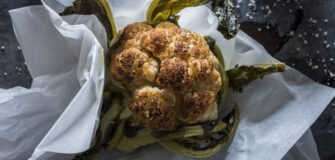
The menu reflects Shani’s lifelong conviction that the finest cooking begins with what is in season and what feels alive in the moment. Signature dishes include his chicken schnitzel stuffed with mashed potatoes, deeply comforting and precisely executed; a hummus and challah pairing that speaks to the oldest and most generous instincts of the table; and a slow-cooked beef and roots stew that asks nothing of the diner except attention. “Each dish at Malka has its own story,” Shani says. “But for me, it’s not only about specific dishes. It’s about what’s in season, what feels right in the moment, what speaks to me. The menu is always alive in that way.”
That aliveness extends to the room and the experience itself. Shani’s vision for Malka is expansive and deeply personal. “Malka is more than a restaurant,” he says. “It’s really an expression of food in its purest form. It’s about creating something that allows people from all walks of life, both kosher and non-kosher, to come together and experience something beautiful through the food, the space, and through each other. I want people to walk in and feel like they’ve stepped into something alive, something already happening, and that they’re part of it. It’s about food, community, and tradition coming together as one. And in Los Angeles, I hope it becomes just that: a place where people connect, enjoy delicious food, and have an experience that stays with them after they leave.”
Pagani is equally clear about the nightly ambition. “The goal is to create a restaurant that feels celebratory every night: generous food, a vibrant room, and a strong sense of community. At its core, it’s about proving that keeping kosher doesn’t require giving anything up. It can be every bit as dynamic, joyful, and destination-worthy as any great restaurant in the city.” He is sanguine about the challenge of opening in a complicated moment. “Opening a restaurant takes optimism, and we lead with that. A great table is one of the oldest ways people come together and remember what’s good. We think LA is ready for exactly that kind of warmth and hospitality in a kosher restaurant, and that’s the spirit we’re bringing to Malka.”
Shani sees Los Angeles as uniquely suited to receive it. “Los Angeles is one of the most exciting food cities because it doesn’t try to be one thing,” he says. “It’s made of many cultures, many voices, all living together. There’s freedom here. People are open, they experiment, they follow instinct. But at the same time, there’s a real respect for ingredients, for the land, for how people want to eat and live. For me, it’s a place where food becomes very personal. It reflects who you are, where you come from, and how things are always changing.”
In a city where the conversation around Israeli and Jewish food has never been louder or more complicated, Malka arrives not as a provocation but as an invitation. “To cook from identity is always a kind of vulnerability,” Shani acknowledges. “There is a lot happening in the world, but for me, we speak through food. The challenge is not the noise around us; it’s staying true to that feeling, to the instinct, to the honesty of the food. Food doesn’t argue. It goes straight to the heart, to memory, to something very quiet inside us. And in that place, people can meet. Malka doesn’t try to speak loudly. It just invites connection.” For the Los Angeles Jewish community, and for every diner willing to pull up a chair, that invitation is long overdue.
The Bigger Picture
Ask Eric Greenspan whether Mish and Malka are part of the same conversation, and his answer is generous and expansive. “The rising tide lifts all ships,” he says. “Any restaurant that brings a unique perspective to cuisine only strengthens the city and its culinary offerings.” He sees Mish in conversation not just with Malka but with every restaurant doing something genuine and specific across the whole improbable, in exhaustible Los Angeles table.
That generosity of spirit is what these two restaurants share most deeply. Eyal Shani brings his most personal restaurant to a city he believes is searching for exactly what Malka offers: meaning, connection, and food that goes straight to the heart. Eric Greenspan returns to La Brea with the conviction that the deli was never just about food; it was about what happens when a community claims a room and refuses to leave. Both are making the same argument: that Jewish food, expressed fully and without apology, is not a niche offering for a specific audience. It is a gift to the city. It is, as it has always been, an invitation to sit down.
For more information about Mish visit: mishdeli.com
For more information about Malka visit: malka-usa.com/los-angeles