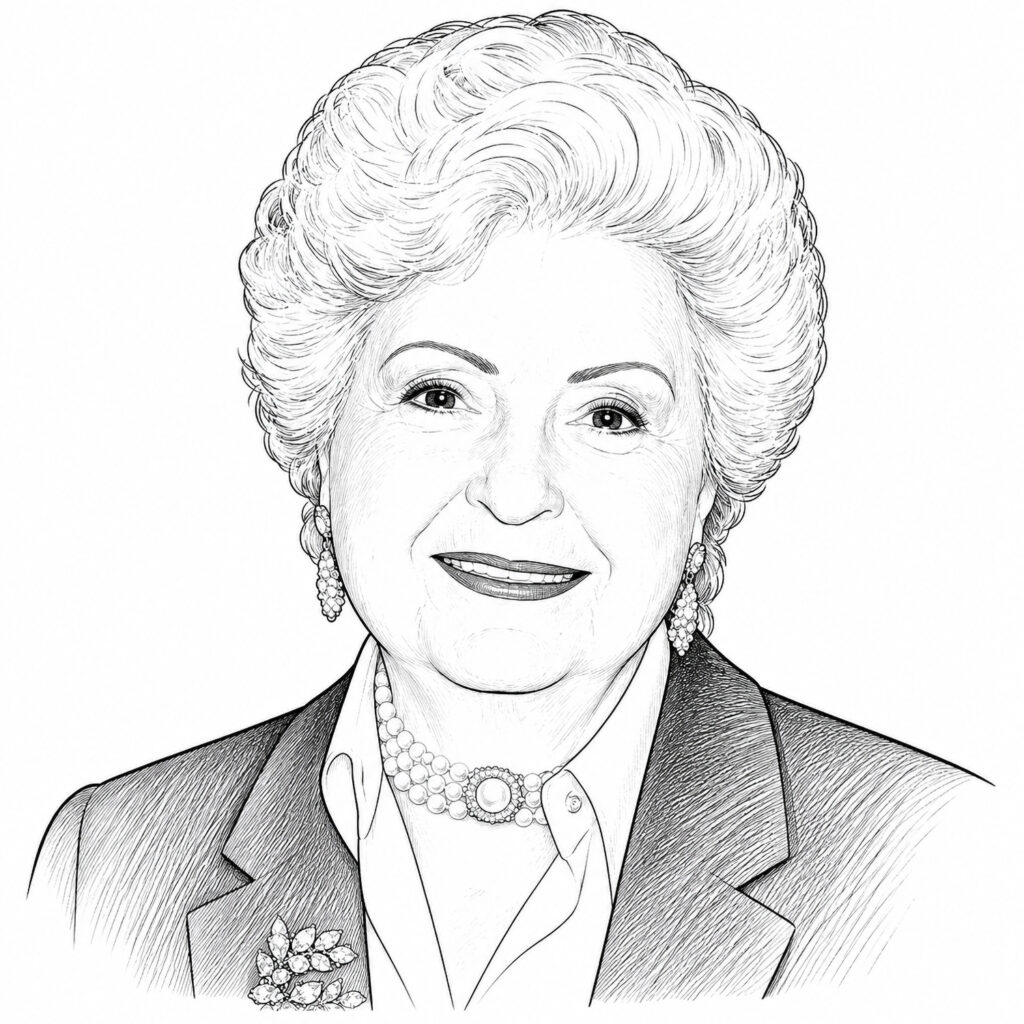
Ruth Handler was born on November 4, 1916, in Denver, the youngest of ten children of Polish Jewish immigrants. Her family had crossed an ocean for the promise of America, and Ruth would spend her life making good on that in ways her parents could never have imagined. At sixteen she met Elliot Handler, the man she would marry, and at nineteen she moved with him to Los Angeles, arriving in a city where antisemitism was still woven into the texture of daily life. Biographer Robin Gerber noted that Ruth asked Elliot to go by his middle name rather than his Jewish first name, Isadore, when they arrived, because she had felt the sting of prejudice and believed an Americanized name would open more doors. That instinct, to navigate a hostile world with pragmatism and then remake it from the inside, defined her career.
In 1945, Ruth and Elliot co-founded Mattel in Hawthorne. Ruth served as the company’s first president, and in 1959 she introduced to the world a doll she named after her daughter Barbara: Barbie. The concept was radical. At the time, every doll available to little girls was a baby, implicitly telling them that their future was motherhood. Barbie was an adult woman with a career, an apartment, and ambitions. Handler believed that play shapes the imagination, and that a child who plays at being a doctor, an astronaut or a businesswoman will grow up understanding that those lives are available to her. It was a deeply Jewish idea: that education and aspiration, even through play, are sacred acts. Handler was the first woman elected to the Toy Manufacturers Association board of directors and the first woman appointed to the Federal Reserve Board. She was the inaugural Woman of Distinction of the United Jewish Appeal. Her success at Mattel was not incidental to her identity as a Jewish woman in postwar America. It was an argument against every door that had been closed to people like her.
““When I conceived Barbie, I believed it was important to a little girl’s self-esteem. Now I find it even more important to return that self-esteem to women who have lost theirs.” — Ruth Handler ”
When she was diagnosed with breast cancer and underwent a mastectomy, she could not find a prosthetic that looked or felt natural. So, she did what she had always done: she identified a need, refused to accept that nothing could be done, and built the solution. She founded a new company, Nearly Me, and created a prosthetic breast that gave women their sense of self back after surgery. Her entire career was animated by the same impulse: to see women clearly, to take their needs seriously, and to give them what they needed to believe in themselves.
Ruth Handler did not fight antisemitism with a speech or a lawsuit. She fought it by succeeding so completely and so visibly that the world had no choice but to make room for her. She built one of the most recognizable brands in history, changed what little girls believed was possible for themselves, and then, when life handed her a challenge, she built something new again. That is what strength looks like.